
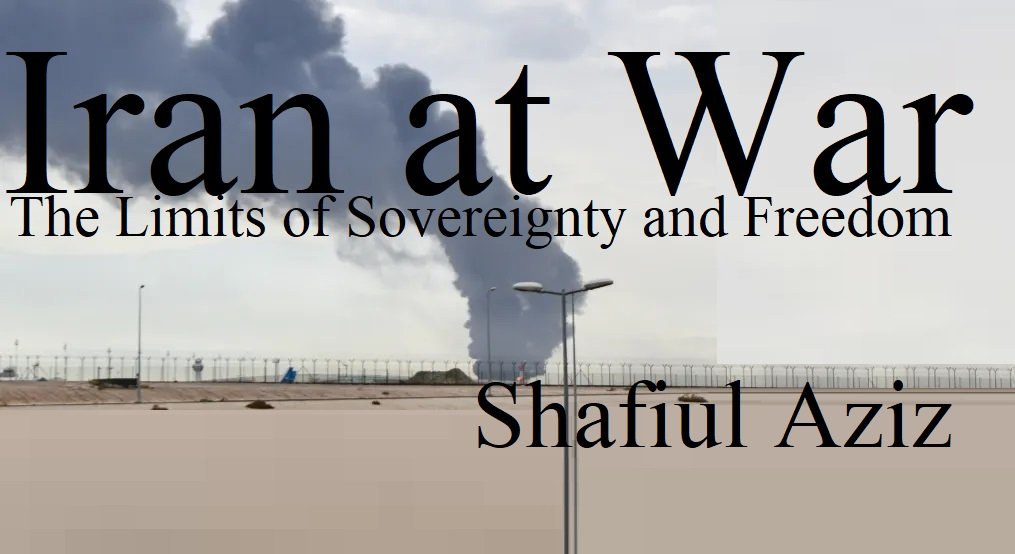
(I kept thinking of Persian cats buried under rubble, and of mirrors shattered into a thousand quiet shards when the freedom-loving imperium rained fire over Tehran, Isfahan, Mashhad, Shiraz, Tabriz, Qom—over every city that once held light.)
The latest escalation in West Asia did not simply produce outrage; it quickly reinstated a familiar demand: that observers choose sides. No sooner had images and reports of destruction begun circulating than debate hardened into two opposing poles. One cast the conflict as a defense of Iranian sovereignty against the U.S.-Israeli aggression; the other, while conceding the illegitimacy of intervention, held out cautious hope that it might yet deliver freedom. Framed in such terms, it appears as a clash of political commitments, while displacing attention from tensions internal to the reconfiguring global political-economic order.
The crisis becomes intelligible only when located within the material infrastructures through which global capital circulates. At stake is not interpretation, but location. Within the existing configuration of capital movement, Iran occupies a strategic position at the intersection of geopolitics, energy distribution, and global finance. A significant share of internationally traded oil passes through the Strait of Hormuz, rendering Iran indispensable to global capital circulation. Geopolitical antagonism, viewed at a different scale, emerges as an effect of uneven integration into circuits structured by energy and finance.
The underlying contradiction lies here: Iran’s centrality does not imply inclusion. It coexists with internal exclusion from the global system, such that integration takes the form of managed and unequal incorporation. The crisis is shaped by this simultaneous condition of indispensability and constraint, above all under the regime of sanctions. Sanctions have reorganised Iran’s participation in global capitalism, enforcing integration on punitive and asymmetrical terms. They are not exceptional tools of coercion but integral components of neoliberal financial architecture. As a result, exclusion through sanctions—structured as inclusion—secures accumulation under conditions of instability for Iran.
Financial infrastructure most clearly reveals this circumscribed integration. Exclusion from dollar-clearing systems and periodic disconnection from SWIFT have redirected Iran’s engagement with global circuits of capital into narrower and more indirect financial networks. However, circumvention is not an escape. It is re-entry, on worse terms. That re-entry takes concrete form through trade in non-dollar currencies, energy agreements with China, and expanding financial ties with Russia and other BRICS-aligned economies. In practice, these arrangements offer limited and asymmetrical scope for Iran’s capital expansion. Yet their effects are not confined to exchange alone; they have already reshaped the nature and centres of capitalist accumulation in an emerging multipolar world.
Nowhere is this reorientation and asymmetry clearer than in Iran’s relation with China. China functions as a crucial outlet and intermediary under sanctions, while Iran remains in a subordinate position within a far larger network of capital accumulation. This imbalance allows China to shape the terms of exchange. Dependence here marks subordination within a differentiated capitalist order, not entry into an alternative one. For Iran, renewed external coordination with emerging powers proceeds through selective alignment while offering partial stability and preserving the underlying asymmetry. As such, Iran’s reorientation redistributes dependence toward emerging centres of capital rather than overcoming it.
The reorientation of capitalist accumulation in and around Iran has not remained external. It has reorganised the internal movement of capital as well. Restrictions on capital, markets, and foreign exchange have increasingly redirected flows of capital across multiple, uneven pathways in and out of the Iranian economy. When formal channels are blocked, these flows continue along costlier, indirect, and more fragmented routes.
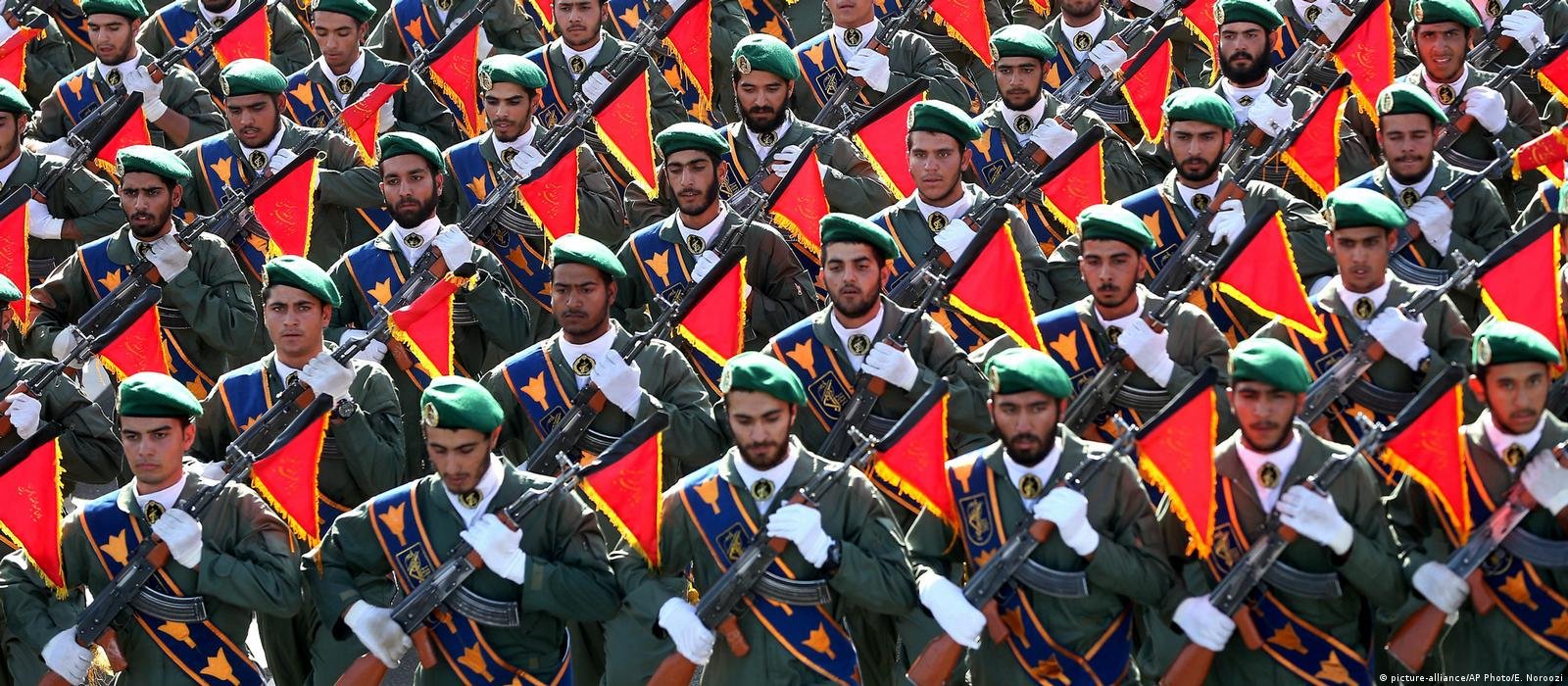
Under these conditions, state-linked intermediaries have come to occupy a central role in mediating these dispersed circuits of capital and exchange. In practice, this role has increasingly fallen to entities such as the Islamic Revolutionary Guard Corps and major bonyads, active across sectors from construction and energy to finance and trade. Over time, their expansion intensified state intervention in the domestic economy, drawing key sites of capital formation closer to the centres of state authority. Access to accumulation, in turn, increasingly came to depend less on market position than on proximity to power: firms secure contracts, credit, and market access through alignment with these parastatal networks. The result has been the consolidation of a parastatal form of accumulation, stabilising the system through the management of the disorganisation generated by these uneven channels of circulation. Capital, when confronted with barriers, does not cease to move; it reorganises its pathways.
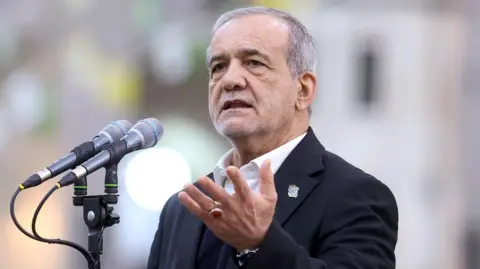
From this point, the problem is no longer simply one of access—internal or external, given that state intervention has already reorganised it—but of coordinating accumulation. It becomes a question of holding together an organised system of accumulation structured around parastatal actors. In Iran, the political formation that coordinates the reorganisation of the internal order takes an increasingly authoritarian form. This consolidation of power organises and coordinates accumulation within a strictly state-supervised arrangement. However, it does not resolve the underlying instability. At this point, conditions of accumulation begin to constrict as profitability comes under strain amid restricted expansion and uneven returns in external linkages. Consequently, surplus accumulation assumes an increasingly coercive form, producing recurrent cycles of unrest that pressure—and at times exceed—institutional limits.
At the level of the labour regime, these dynamics are most apparent. With profitability under pressure, capitalist accumulation in Iran increasingly relies on subcontracting, informalisation, and precarious employment as cost-reducing strategies. Labour precarity is not a residual effect of crisis; it is actively reproduced through it. These are not incidental developments but the mechanisms through which labour is reorganised for surplus extraction by parastatal actors.
This transformation is not recent but rooted in a longer historical process. Its consolidation can be traced to the post–Iran–Iraq War period, when Iran moved from a wartime command economy toward a reconstruction-oriented model. In this transition, liberalization weakened labour protections and expanded the economic role of semi-state institutions. The effects of this restructuring have been far-reaching, particularly in the organization of labour. According to a 2023 ILO report, Iran’s labour force is estimated at roughly twenty-eight million, while only around 40 percent of the working-age population participates. A growing share of the workforce is employed on temporary or insecure contracts, weakening collective bargaining and heightening vulnerability to economic shocks.
The political effects of this restructuring have become increasingly visible. In this setting, labour unrest in Iran has become more recurrent and coordinated in recent decades, particularly in the energy sector—the very site of the country’s continued integration into the global economy. The 2021 oil and petrochemical workers’ strikes, known as the “Campaign 1400” movement, spread across dozens of facilities, signaling not only discontent but a nascent militancy among contract workers produced by the neoliberal transformation of the labour regime.
Beyond the reorganization of labour and class relations, these same processes have also reshaped Iran’s social landscape in gendered ways. Female labour-force participation remains among the lowest in the region, at around 14–15 percent based on 2024 estimates from the ILO, while women are disproportionately concentrated in informal and precarious employment. Female graduates face significantly higher unemployment than men, reflecting not merely cultural constraints but the structural effects of labour-market reorganization. Gendered exclusion operates within the economy as one of the ways its constraints are organized and distributed. Gendered precarity, in that respect, is not residual but constitutive of the Iranian economy itself, shaping both material life and the horizons of political expression.
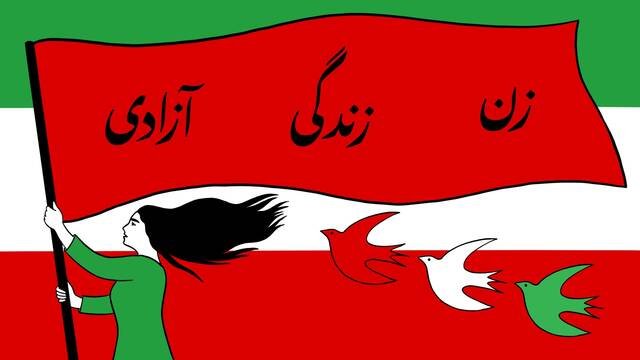
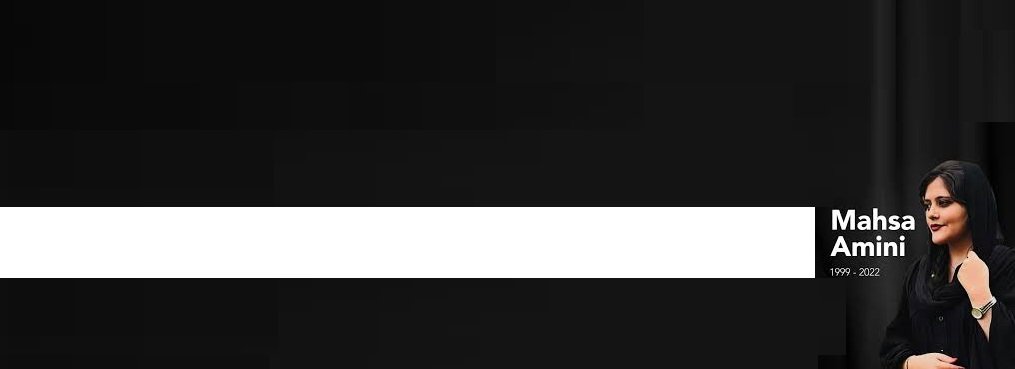
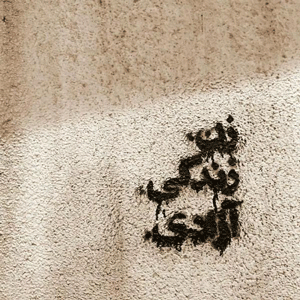
The 2022 uprising under the slogan “Woman, Life, Freedom” must be situated in these circumstances rather than treated as an isolated eruption. While the death of Mahsa Amini provided the immediate catalyst, the protests drew their force from a socio-economic landscape already marked by precarious labour, blocked mobility, and institutionalized inequality. Feminist mobilization here articulated not only resistance to state regulation of bodies, but a broader refusal of the economic and social arrangements that reproduce dispossession. What appears as a demand for rights is also a refusal of the material conditions that make such demands necessary.
In light of these developments, the terms of the sovereignty–freedom binary are no longer oppositional but internally related. This opposition persists not because it clarifies the crisis, but because it obscures the conditions that produce both. “Freedom” increasingly appears as alignment with the neoliberal imperatives of integration into the Western-centered core of global capitalism: market openness, financial inclusion, and political forms organized by the institutional logic of that core. “Freedom,” in this sense, names not emancipation as such, but a particular mode of integration into the dominant circuits of global capital. “Sovereignty,” meanwhile, registers as the capacity to manage constraints: to discipline labour, control resources, and deploy coercion within a restricted position, as emerging centres of capital accumulation provide only partial and asymmetrical alternatives to Western-dominated circuits. The opposition does not mark a real alternative; it registers two expressions of the same structural constraint.
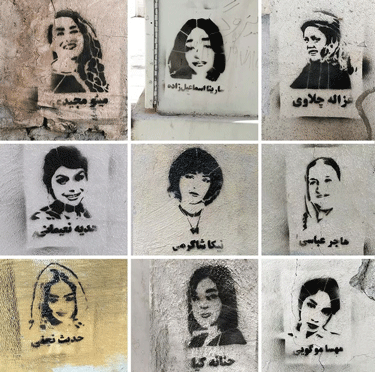
Still, in lived political struggle, the language of freedom and sovereignty continues to organize concrete and ostensibly irreducible antagonisms in Iran and in discourse about it. To regard Iranian society as politically passive under this dual constraint, however, would be a profound misreading. Iran has repeatedly generated powerful movements from below—from the Constitutional Revolution to the upheavals of 1979 and continuing waves of labour, feminist, and social protest—making its political trajectory far more dynamic than external observers often assume.
Recognizing the history of political agency requires moving beyond simplified conceptual frames. To side with “freedom” risks aligning with external aggression and reproducing the trope of helpless Iranians awaiting rescue from imperial intervention. Invoking sovereignty alone, nonetheless, obscures forms of state violence that have long constrained a deeply rooted history of protest and socio-political mobilization. Iran’s future will be shaped neither by external intervention nor by abstract commitments to political ideals, but by struggles emerging from these material conditions.
It follows that the crisis surrounding Iran does not present a choice between sovereignty and freedom. Instead, it reveals how both are produced within a global political-economic order whose contradictions now operate inside Iran, across its labour regime, institutional arrangements, and recurring cycles of protest and repression. Power, accumulation, and resistance do not stand apart; they are mutually constitutive expressions of the same condition.
If this is the terrain on which the crisis unfolds, then there is no exit from such a form of unfreedom but through the agency of the Iranian people as conscious historical actors; transformative emancipation can only be realized through them and cannot be delivered from elsewhere.
Refined Freedom, Eroded Conscience by Shafiul Aziz
Read more by Shafiul Aziz
gaanpaar English originals

- ভালো থাকুক তেহরান ইসফাহান || শফিউল আজিজ - April 9, 2026
- Iran at War: The Limits of Sovereignty and Freedom || Shafiul Aziz - April 4, 2026
- Refined Freedom, Eroded Conscience || Shafiul Aziz - February 21, 2026
COMMENTS